
As temperatures drop and icy conditions become more common, keeping your site safe and running smoothly is more important than ever. Black ice, snow, and freezing rain are all common hazards that can make outdoor areas hazardous and more difficult to manage.
Winter maintenance tackles these challenges by ensuring that spaces like car parks, walkways, and loading areas remain safe and accessible. It usually means spreading salt or grit and clearing snow to prevent ice from forming, or dealing with it promptly if it has already formed.
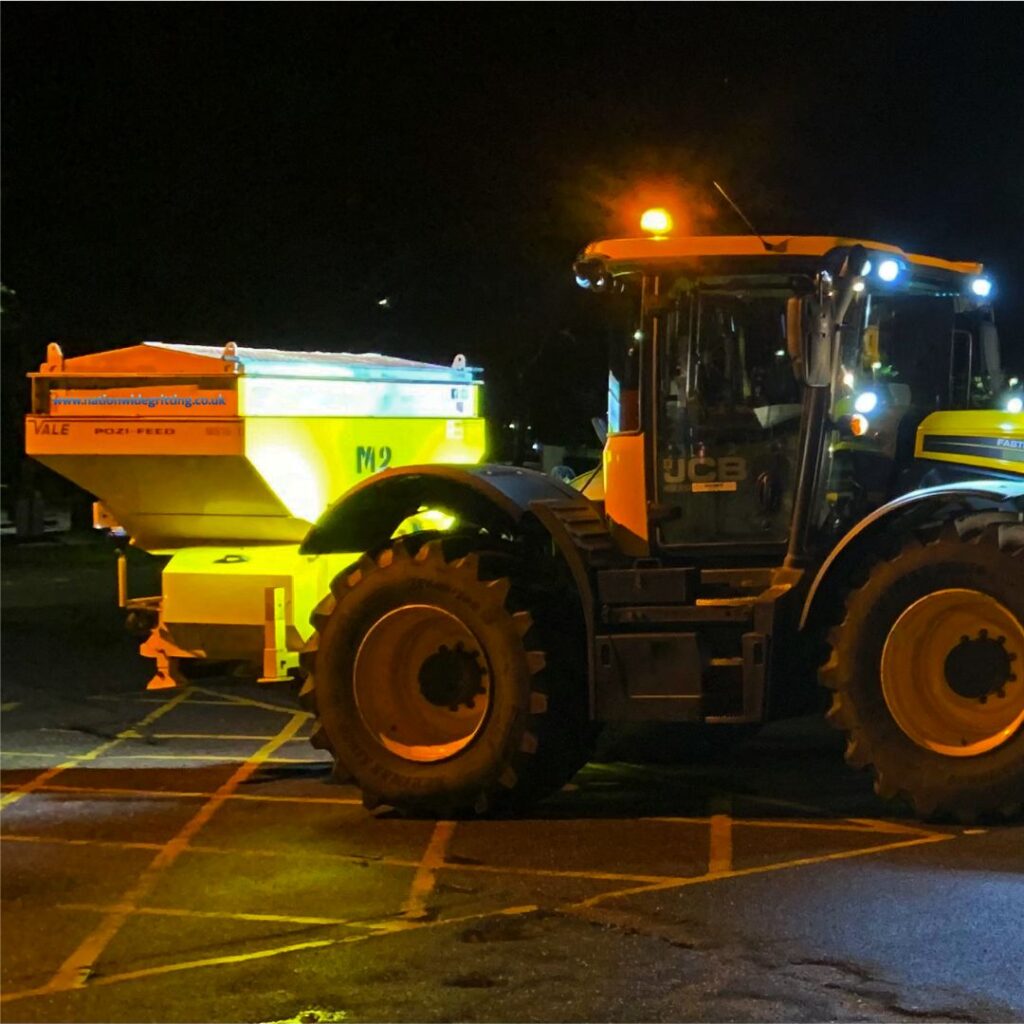
What’s the difference between proactive and reactive winter maintenance?
There are two methods for handling winter maintenance: proactive and reactive. Both work, but the right choice depends on your site, the level of activity, and how much risk you’re prepared to accept. With Road Safety Week just around the corner, now’s the perfect time to look at how each method works – and why getting ahead of the ice is almost always better than trying to fix it afterwards.
Proactive winter maintenance
By using weather forecasts and temperature checks, proactive winter maintenance takes early action to stop ice from forming. Gritting teams spread salt or grit before freezing conditions set in, keeping surfaces safe and slip-free.
This approach keeps people safe, prevents slips and falls, and helps your business run smoothly without weather-related disruptions. Proactive gritting can often seem like an added expense; however, it can save money in the long run by avoiding accidents, damage, and downtime. Best of all, it gives you peace of mind knowing your site is ready before the frost hits.
It’s a preferred option for larger sites, busy premises, or businesses that can’t afford closures, such as hospitals, schools, logistics hubs and retail parks.
Reactive winter maintenance
Reactive winter maintenance comes into play after frost, snow, or ice has already formed. This means action is taken once the hazard is visible or reported.
The reactive method has a few key benefits. It’s a pay-as-you-go option, meaning you only pay for treatment when it’s needed, which can be a cost-effective option for smaller sites or areas with low foot traffic. It also allows for targeted treatment, as grit and salt are applied exactly where and when they’re required, rather than on a fixed schedule.
However, there are a few downsides to consider. During busy cold snaps, response times may be delayed if your provider is dealing with multiple callouts, leaving your site untreated for longer. There’s also an increased risk that ice could cause slips or accidents before help arrives. In some cases, operations may need to be paused, or specific areas may need to be closed off until conditions are safe again.
Reactive gritting is ideal for smaller premises, low-traffic sites, businesses that can tolerate short delays in operation, and locations where ice formation is rare.
Proactive vs reactive: Which is right for you?
Choosing between proactive and reactive winter maintenance depends on your site’s size, activity level, and risk tolerance.
In short, proactive gritting is like insurance – you hope you won’t need it, but when winter strikes, you’ll be glad you have it. Reactive gritting can work well for smaller or lower-risk sites, but it carries more uncertainty.
The case for being proactive
Think of proactive winter maintenance as the “prevention is better than cure” approach. Treating surfaces before frost forms is far more effective than dealing with ice after it has already formed.
Once ice bonds to the surface, it becomes harder to remove and takes longer to melt, even with salt. That delay can increase the risk of slips and vehicle incidents, especially during early-morning operations or busy trading times.
By planning ahead, you prevent accidents and protect your business from avoidable disruptions, claims, and costs. It’s the smarter, safer, and more sustainable choice for most commercial sites.
Why it matters this winter
Road Safety Week is an excellent reminder that taking precautions saves lives. The same principle applies to your premises. By acting early, you protect everyone who uses your site.
It’s important to remember that conditions can change fast. Reactive callouts may leave you waiting when demand peaks. A proactive contract means your site is prioritised, pre-treated, and protected before the frost hits.
Final words
Selecting the right winter maintenance strategy is about protecting your people, reputation, and operations. A well-chosen contract ensures you can feel confident that when temperatures plummet, your site will remain safe, open, and fully operational. If you begin planning now, you’ll be ready when the first frost arrives.
Define your needs, compare proactive and reactive options, check the fine print, and choose a provider that understands your business. Whether you’re managing a busy retail park, an industrial site, or office grounds, a professional gritting partner can make all the difference.